
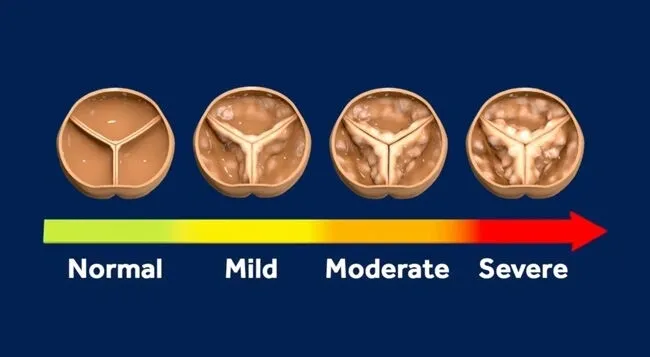
Your heart’s aortic valve acts like a one-way door, allowing blood to flow from the heart’s left ventricle to the rest of your body. Aortic stenosis (AS) occurs when this valve becomes narrowed, restricting blood flow and forcing the heart to pump harder. Over time, this extra strain can lead to heart failure and life-threatening complications.
At Oly Heart & Vascular Institute, we provide advanced diagnostic testing and treatment options — including minimally invasive procedures — to manage aortic stenosis and restore heart function.
What Is Aortic Stenosis?
The aortic valve normally opens fully with each heartbeat. In AS, the valve leaflets thicken, stiffen, or fuse together, preventing normal opening. This narrowing can progress slowly over many years or develop more quickly in certain conditions.
Causes of Aortic Stenosis
Aortic stenosis can result from several different conditions:
- Age-Related Calcific Degeneration – Most common in adults over 65; calcium deposits limit valve movement.
- Congenital Valve Abnormalities – Bicuspid, unicuspid, or quadricuspid valves increase risk of early narrowing.
- Rheumatic Heart Disease – Valve scarring after rheumatic fever, still seen in older U.S. adults.
- Radiation-Induced Valve Disease – From prior chest radiation for cancers.
- Chronic Kidney Disease (CKD) – Mineral imbalances accelerate valve calcification.
- Infective Endocarditis – Infection-related damage and deformity.
Symptoms of Aortic Stenosis
Mild AS may be silent. As narrowing worsens, common symptoms include:
- Shortness of breath with exertion
- Chest pain or pressure (angina)
- Fatigue or reduced activity tolerance
- Dizziness or fainting spells (syncope)
- Leg or ankle swelling
Warning: Once symptoms appear, severe AS can be life-threatening without prompt treatment.
Prognosis: What to Expect
The outlook for aortic stenosis depends heavily on disease severity and treatment timing.
- Mild to Moderate AS: Patients often live for many years with regular monitoring.
- Severe AS Without Symptoms: Average survival is similar to the general population, but progression can occur quickly, so close follow-up is essential.
- Severe Symptomatic AS Without Treatment: Survival averages 2–3 years after symptom onset, with a high risk of sudden cardiac death.
- Severe AS With Timely Valve Replacement: Most patients experience dramatic improvements in symptoms, energy, and survival, with excellent 5–10 year outcomes depending on valve type and other health conditions.
Diagnosis
At Oly Heart, we use advanced tools to assess severity:
- Echocardiogram (gold standard)
- Electrocardiogram (ECG)
- Cardiac CT/MRI
- Cardiac catheterization when needed
Treatment Options
- Monitoring: For mild/moderate AS without symptoms.
- Surgical Aortic Valve Replacement (SAVR): Open-heart procedure to replace the valve.
- Transcatheter Aortic Valve Replacement (TAVR): Minimally invasive option for many patients, even those at intermediate risk.
Life After Treatment
With proper follow-up, most patients return to normal activities and enjoy a significant improvement in quality of life. Our team provides:
- Cardiac rehabilitation
- Long-term monitoring
- Lifestyle counseling for heart health
Oly Heart & Vascular Institute: Your Partner in Valve Care
From early detection to advanced valve replacement, our cardiologists and structural heart specialists offer personalized, guideline-based care for patients across Olympia, Lacey, Tumwater, and Southwestern Washington.
📍 Address: 3620 Ensign Rd NE, Ste B, Olympia, WA 98506
📞 Call us today to schedule your evaluation.
Oly Heart & Vascular Institute – Leading with Precision in Heart Health.